Back to Sport After Injury or Disability — Adaptive Technology and Equipment Guide (2026)
Sport is about more than fitness. For many people, it's connection, identity, routine, and joy. And for people with disability, research consistently shows that sport and physical activity improve quality of life, mental health, and sense of community — sometimes dramatically.
The good news is that adaptive equipment has come a long way. Racing wheelchairs, running blades, adaptive surfboards, and sit-skis are allowing people to participate in sports that once seemed out of reach. Whether you're returning to a sport you loved before an injury, or exploring something new, there's likely a pathway in.
This guide covers the main categories of adaptive equipment available in Australia, how to find community organisations that can help, and what funding options exist.
Wheelchairs for Sport
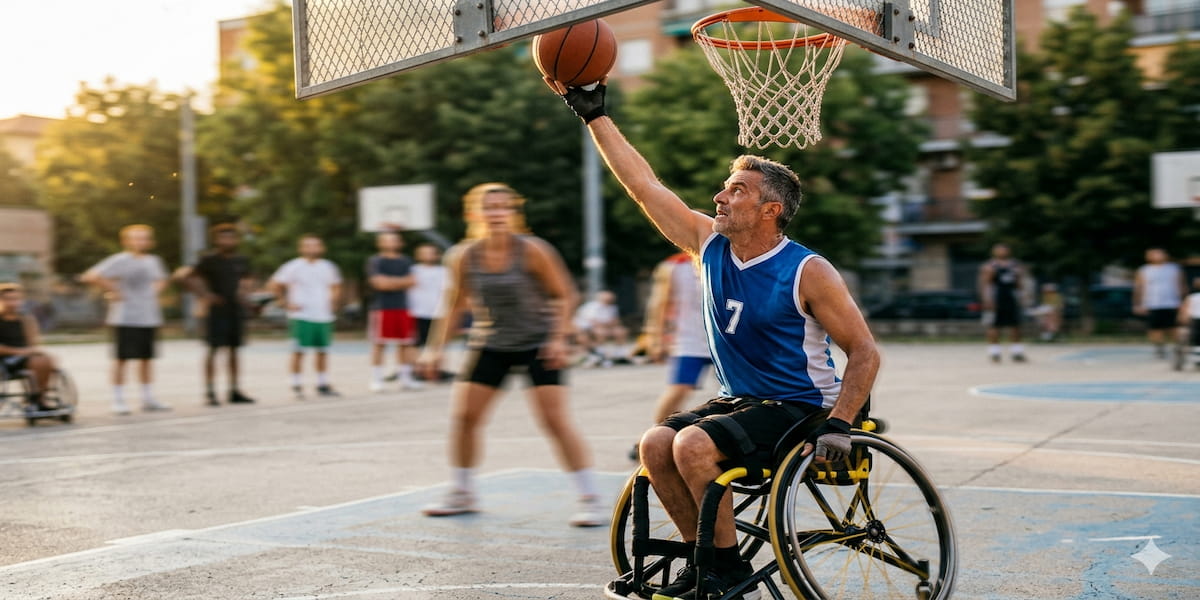
If you use a wheelchair, your everyday chair probably isn't designed for sport — and that's okay. Sport-specific chairs are built for performance, and the right one depends entirely on what you want to do.
- Basketball and tennis chairs — rigid aluminium or titanium frames, low seat heights, and angled (cambered) wheels that improve stability and manoeuvrability during quick direction changes. Popular brands include Quickie, TiLite, and Colours in Motion. Clubs often have loaner chairs to try before you commit to buying.
- Racing chairs — a completely different design: a kneeling position, a streamlined shell, and three wheels (two at the rear, one steering wheel at the front). Used in marathons, track athletics, and road racing. Lightweight carbon fibre models go very fast.
- Rugby chairs (power wheelchairs for quad rugby) — reinforced frames designed to withstand the contact and collisions of wheelchair rugby. Quad rugby is open to people with impairments affecting all four limbs, and it's one of the most exciting sports to watch and play.
- Hand cycles — three-wheeled recumbent cycles pedalled with the arms. Road hand cycles sit very low to the ground and can reach impressive speeds; off-road versions handle trails and fire tracks. A great option for wheelchair users who want to get outside and cover distance.
- All-terrain and beach wheelchairs — wide balloon tyres that roll over sand, grass, and uneven ground. Several local councils and beach organisations in Australia have beach wheelchairs available for free loan — check with your local council or surf lifesaving club before buying.
Prosthetics for Sport
If you have a limb difference or amputation, sport-specific prosthetics can open up activities that feel impossible with an everyday prosthetic — or with no prosthetic at all.
- Running blades — carbon fibre energy-return prosthetics that store and release energy with each stride, making running biomechanically efficient. The Ossur Cheetah and Ottobock Taleo are the best-known brands. Many runners with blades report that running feels more natural than walking on a standard prosthetic.
- Swimming prosthetics — waterproof or silicone options exist, but many swimmers compete without a prosthetic entirely. Swimming is one of the most accessible sports for people with limb differences — buoyancy changes everything.
- Sport-specific upper limb devices — hooks and terminal devices designed for specific sports: climbing hooks, cycling terminal devices, swimming fins. These are usually custom-made through a prosthetist who understands your sport.
Funding for prosthetics:
- NDIS — if you have a plan, prosthetic limbs are funded under Capital Supports as AT.
- WorkCover — covers prosthetics related to a work injury.
- TAC (Transport Accident Commission, VIC) — covers prosthetics for people injured in road accidents in Victoria.
- DVA (Department of Veterans' Affairs) — eligible veterans can access prosthetics and adaptive equipment.
Water Sports
Australia's relationship with the water is deep, and adaptive options are better than ever.
Surfing
Adaptive surfing has grown enormously in Australia over the past decade. Depending on your needs, options include prone boards with handles for grip, adaptive seats and strapping systems, and the Boost Surfin — a motorised fin attachment that assists paddling for people with limited upper limb strength.
The Disabled Surfers Association (DSA) is the standout organisation here. They run free surf days at beaches across Australia, pairing participants with trained volunteer "huggers" who support them in the water. For many people, it's their first time surfing — and it's transformative. Visit disabledsurfers.com.au to find an event near you.
Kayaking
Outriggers improve stability for people with balance or trunk control challenges. Adapted paddles — shorter, lighter, or with modified grips — help people with limited upper limb function. Sit-on-top kayaks are generally easier to transfer in and out of than sit-inside designs. Paddle Australia has disability programs and can connect you with local clubs.
Sailing
Sailability Australia runs sailing programs for people with disability at yacht clubs around the country. Accessible vessels, trained volunteers, and a welcoming community make it an excellent entry point. Visit sailability.com.au to find your nearest program.
Swimming
Most public pools in Australia now have hoist access, and many local swimming clubs actively welcome swimmers with disability. Swimming is low-impact, highly adaptable, and one of the most consistent sports for people managing pain or fatigue.
Winter Sports
Australia's ski fields in Victoria and NSW are increasingly accessible, and adaptive winter sport programs are worth knowing about.
- Sit-skiing — a bucket seat mounted on a ski frame, used with short ski poles called outriggers for steering and balance. Instructors often ski behind, attached by a cord, until the skier is confident. Available at Perisher, Thredbo, Falls Creek, and Mount Buller.
- Adaptive snowboarding — bi-ski options exist for beginners, and some riders with lower limb differences ski standing on one leg or with prosthetics.
- Outriggers — forearm crutches with mini ski tips on the end, used by people with lower limb disability who can stand. Allow a modified but independent skiing technique.
Disabled Wintersport Australia (DWA) runs lessons, rental equipment, and multi-day camps at major ski resorts. Their instructors are trained specifically in adaptive winter sport techniques. Visit disabledwintersport.com.au.
Cycling
Cycling for people with disability goes well beyond two-wheel bikes.
- Tandem bikes — a sighted or able-bodied pilot rides at the front; the person with disability (the stoker) sits behind and pedals. Used by many blind and low-vision cyclists, as well as people with some cognitive disabilities.
- Tricycles — three wheels provide stability for people with balance impairments, vertigo, or conditions affecting coordination. Electric-assist trikes extend range and reduce fatigue on hills.
- Recumbent bikes — a lower centre of gravity and a more supported riding position suits some spinal cord injuries and people who can't sit upright comfortably.
- Hand cycles — as mentioned above, road and trail hand cycles are a fantastic option for wheelchair users who want to experience cycling. Some local cycling clubs have hand cycles available for loan.
Riding for the Disabled Australia (RDA) offers horse riding programs that combine therapeutic benefits with genuine recreation. RDA centres operate across the country — riding builds core strength, balance, and confidence in a way that's hard to replicate elsewhere. Visit rda.org.au.
NDIS Funding for Sport AT
The NDIS can fund sport and recreation equipment — but it requires some planning.
What the NDIS will fund:
Equipment and AT that relates directly to your disability — including sport-specific items like racing wheelchairs, running blades, adaptive kayaks, or sit-ski equipment. The key is that the item must be connected to a disability-related need, not just a general interest in sport.
What the NDIS won't fund:
Memberships, competition entry fees, coaching, and team uniforms. These are classed as everyday expenses. Some Capacity Building line items can cover swimming lessons or similar supports if they relate to a skill-building goal.
How to make the case:
- Make sure your NDIS plan includes goals related to Social, Community and Civic Participation or Improved Health and Wellbeing — sport funding usually sits under these supports.
- Ask your occupational therapist or physiotherapist to write a letter explaining why the specific equipment relates to your disability and functional goals. Planners respond better to equipment requests that are clearly linked to clinical need.
- Ask clubs and organisations whether they have equipment loan programs before spending money. Many adaptive sport clubs have demo or loan equipment for new participants.
Community Organisations Worth Knowing
You don't need to figure this out alone. Australia has a strong adaptive sport community, and most organisations are genuinely welcoming.
- Paralympics Australia — your starting point for finding para-sport in Australia. Visit parasports.com.au to explore 40+ sports and find your nearest club or program.
- Disabled Surfers Association Australia — disabledsurfers.com.au — free surf days, trained volunteers, all welcome.
- Disabled Wintersport Australia — disabledwintersport.com.au — lessons and camps at Australian ski resorts.
- Riding for the Disabled Australia — rda.org.au — horse riding programs in most states.
- Sailability Australia — sailability.com.au — accessible sailing at clubs nationwide.
- Paddle Australia — inclusive kayaking and canoeing programs.
- Australian Wheelchair Sports Association — wheelchair basketball, tennis, and more.
Getting Started
Getting back into sport after disability or injury can feel daunting — especially if the activity you loved looks different now, or you're not sure whether your body can manage it. That's completely normal.
The most important first step is almost always a phone call. Ring the sport organisation, ask about their adaptive programs, and tell them where you're at. Most adaptive sport communities are built by people who've been through similar journeys. They get it.
Your occupational therapist or physiotherapist is also a great starting point — they can help you think through what your body needs, recommend appropriate equipment, and write the supporting documentation you might need for NDIS funding.
Sport looks different for everyone. The version that works for you might be competition at the highest level, or it might be a gentle weekly swim with your local club. Both count. Both help.
Disclaimer
This article is for general information only and does not constitute medical, financial, or legal advice. NDIS funding eligibility, product specifications, and organisation details can change — always verify current information directly with relevant organisations, your NDIS planner, or your treating health professional. Mention of specific products and organisations is for illustrative purposes only and does not constitute endorsement.